

Hendersonville, North Carolina
Fast Storm Damage Roof Repair Hendersonville NC
After strong winds or falling branches damage your roof, you need to know what can be fixed before the next rain. Hendersonville Roofing Co provides storm damage roof repair in Hendersonville, NC, helping homeowners with missing shingles, damaged flashing, and leaks. We also serve Flat Rock, Fletcher, East Flat Rock, Mills River, and nearby communities.

4.9/5 Google Rating

127 Customer Reviews

Licensed & Insured
Storm Damage Roofing Services in Hendersonville, NC
Storms can damage different parts of your roof. Some problems are easy to see, while others remain hidden until the next heavy rain.
Wind Damage Roof Repair
Strong winds can lift shingles, break their seals, or tear them away. Ridge caps and roof edges can also suffer damage.
Missing or loose shingles may expose the underlayment to rain. A roofer should check the surrounding materials before recommending repairs.
Hail Damage Roof Repair
Hail can bruise asphalt shingles, knock off protective granules, and dent metal roofing.
Not every mark means serious damage. An inspection helps determine whether the roofing material has lost its ability to keep water out.
Fallen Tree and Branch Damage
Falling limbs can break shingles, damage flashing, or weaken roof decking.
Large branches may also damage the roof structure beneath the visible surface. The affected area needs checking before repairs begin.
Storm Related Roof Leak Repair
Heavy rain and wind can expose weak spots around chimneys, roof vents, and valleys.
Water may enter through damaged flashing or lifted shingles. Finding the entry point helps determine which parts need repair.
Signs Your Roof Has Storm Damage
You may notice problems after a storm even when your roof looks fine from the driveway.
| Warning Sign | Possible Problem | What Needs Checking |
|---|---|---|
| Missing shingles | Wind damage | Shingles and underlayment |
| Ceiling water stains | Roof leak | Flashing and water entry points |
| Shingle granules in gutters | Shingle wear or impact damage | Shingle surface |
| Dented metal panels | Hail or falling debris | Panels and protective coating |
| Fallen branches | Possible impact damage | Decking and roof structure |
| Loose ridge caps | Wind damage | Ridge materials and fasteners |
These signs do not always mean your whole roof needs replacing. A professional inspection can help identify the damage.
What Should You Do After a Storm?
If a storm has damaged your home, start by checking for safety concerns.
Stay away from fallen power lines, broken branches, and damaged roof sections. Never climb onto a storm damaged roof.
If water is entering your home, move belongings away from the affected area when safe. Take pictures of visible damage from the ground or inside your home.
Contact your insurance company to report possible damage. Ask a roofing professional about an inspection and temporary protection if needed.
Keep records of the damage and any temporary repair expenses.
Should You Repair or Replace a Storm Damaged Roof?
Not every storm damaged roof needs replacement.
A few missing shingles or damaged flashing may be repairable when the surrounding materials are in good condition.
Replacement may be considered when damage affects large sections, roof decking is badly damaged, or the roofing materials are already failing.
A careful inspection helps determine whether repairs are practical.
The goal is to fix the damage without recommending more work than the roof needs.
Our Storm Damage Roof Repair Process
Getting your roof checked after a storm should be straightforward. Here is a proposed three step process to review with Hendersonville Roofing Co.
1. Tell Us What Happened
Share when the storm occurred and what you've noticed. Mention missing shingles, fallen branches, ceiling stains, or active leaks.
2. Get Your Roof Inspected
A roofer checks the affected areas, documents visible damage, and explains possible repairs. Review the findings and written estimate before deciding.
3. Repair the Damaged Areas
Once the work is approved, the affected roofing materials can be repaired or replaced. The finished work should be checked, and the area cleaned.
Storm Damage Roofing in Hendersonville's Weather
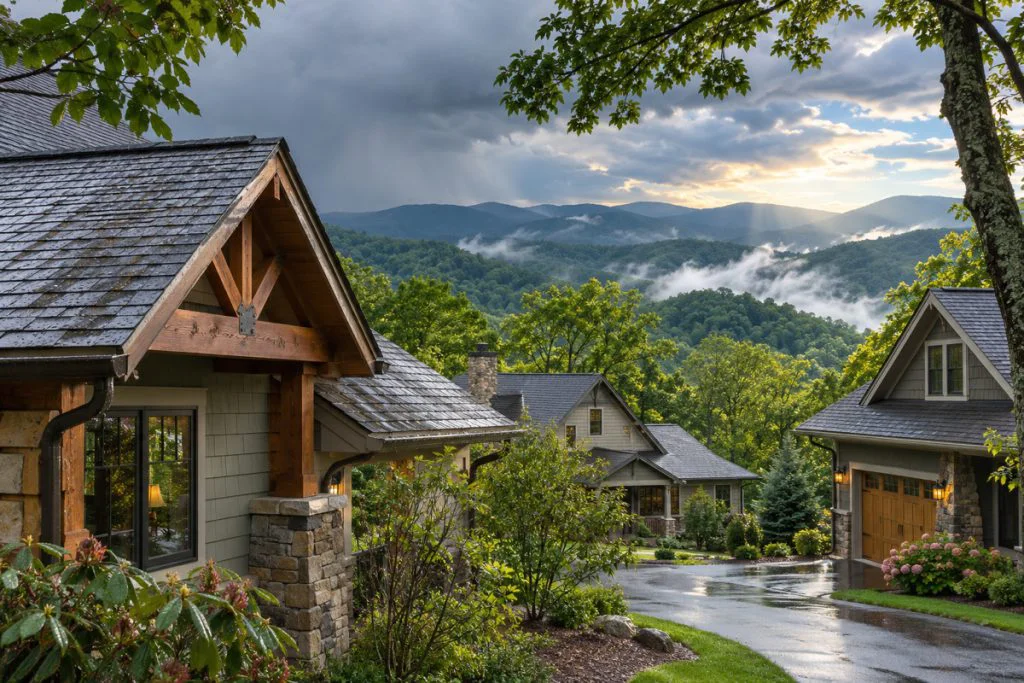
Hendersonville homeowners know how quickly mountain weather can change.
Homes near Kanuga Road, Laurel Park, and Druid Hills often have trees close to the property. Strong winds can bring down branches, while leaves may collect in roof valleys and gutters.

Roof slopes and drainage
Properties around Seventh Avenue and Brevard Road can have different roof slopes, materials, and drainage needs.

Hurricane Helene
Hurricane Helene brought damaging winds and heavy rainfall to Western North Carolina in September 2024. The storm showed why checking roofing materials, flashing, and drainage after severe weather matters.

Inspection after rough weather
Even when damage isn't obvious from the ground, a roof inspection can help identify problems before another storm brings more rain.
Roof Damage and Homeowners Insurance
Homeowners insurance may cover roof damage caused by sudden events such as wind, hail, or falling trees.
Coverage depends on your policy, the cause of damage, and any exclusions or deductibles.
Take pictures, keep repair records, and contact your insurance company. An insurance adjuster may inspect the damage before permanent repairs are approved.
A roofing contractor can provide inspection findings and a repair estimate. Your insurance company decides whether the claim is covered.
Avoid signing an agreement you don't understand or accepting promises of guaranteed insurance approval.
Why Choose Hendersonville Roofing Co?
After a storm, you need to know what happened to your roof and what should be done next.
A useful inspection should identify visible damage, explain the repair options, and help you understand the proposed work.
Ask Hendersonville Roofing Co about its experience with wind damage, hail damage, missing shingles, and roof leaks.
Clear findings and a written estimate can help you make a repair decision without unnecessary pressure.
What Homeowners Say About Our Roofing Work
"Strong winds left several shingles missing from our roof. The crew explained what needed fixing and kept us updated during the repair."
James Carter | Fletcher, NC
"We noticed a leak after heavy rain. The problem was explained clearly, and the repair work was handled without any confusion."
Sarah Mitchell | Flat Rock, NC
"After the storm, we wanted someone to check our roof. They answered our questions, explained the damage, and cleaned up afterward."
Robert Wilson | Hendersonville, NC
1 / 3
What Affects Storm Damage Roof Repair Cost in Hendersonville?
| Cost factor | How it affects the estimate |
|---|---|
| Damage and access | Repair costs depend on the type of damage, affected roof area, materials, and access. |
| Scope of repairs | Replacing a few shingles is different from repairing damaged flashing, plywood, or roof decking after a fallen tree. |
| Slope and hidden damage | A steep roof or hidden water damage can also affect the work required. |
| Written estimate | A written estimate should explain what needs fixing and which materials will be used. |
Storm Damage Roofing FAQs
How do I know if my roof has wind damage?
Look for missing shingles, lifted edges, loose ridge caps, or debris around your home. Some damage is difficult to see from the ground, so an inspection may be needed.
Can storm damaged shingles be repaired?
Yes. Individual shingles can sometimes be replaced when surrounding materials remain sound. Widespread damage may require more extensive work.
Does homeowners insurance cover storm damage roof repairs?
Some policies cover sudden wind or hail damage. Coverage depends on your insurance terms, deductible, and damage cause. Normal wear is often excluded.
How soon should I get my roof inspected after a storm?
Arrange an inspection promptly when you notice leaks, missing shingles, or other damage. Do not climb onto the roof yourself.
Can a roof leak after a storm even if no shingles are missing?
Yes. Wind driven rain may enter through damaged flashing, loose seals, or roof vents. A roofer can check these areas to find the source.
Will insurance pay for a full roof replacement?
Not always. Insurance generally addresses covered damage. Whether repair or replacement is covered depends on your policy and the insurer's assessment.
What if another storm arrives before my roof is repaired?
Keep away from damaged roof areas and contact a roofing professional about temporary protection. Document any new damage and update your insurance company.
Need Storm Damage Roof Repair in Hendersonville, NC?
Get Help With Storm Damage Roof Repair Hendersonville, NC
Missing shingles, fallen branches, or a roof leak after heavy rain should not be ignored.
Contact Hendersonville Roofing Co to discuss the damage, ask about an inspection, and understand your repair options.